

So glad I saw this for the first time in a cinema (where it paradoxically played as a “cult classic” to a sold out auditorium on a cold Monday night). One of those experiences where you can appreciate how original this would have been contemporaneously while also clocking how undeniably influential it’s been on movies for the last quarter of a century.
Once again, I can thank my newfound fondness for manga for helping me appreciate the absurdity of the proceedings – including and especially the ending – rather than feeling overwhelmed by it. Helped to have a game audience who were willing to laugh at some pretty dark stuff (at which we were meant to laugh).
The first act of this – all swelling orchestral music behind cartoonishly loud sound effects – is truly thrilling. You’re either on this ride or you are most definitely not. That it only manages to get weirder than the basic premise of a class of 9th graders being legislatively compelled to fight to the death is the great joy of the experience.
And I suppose that’s what makes it all work – that at the end of the day, you more or less believe these kids are 9th graders who find themselves in a patently absurd situation. Nobody acts appropriately; there is no appropriate way to act.
Strangely, you walk away from it feeling vaguely as if you’ve just been swept away by a romance? I’m not sure how they pulled that off but I look forward to enjoying repeated viewings (at maximum volume) as I attempt to figure it out.
Viewed at Lido Cinemas.

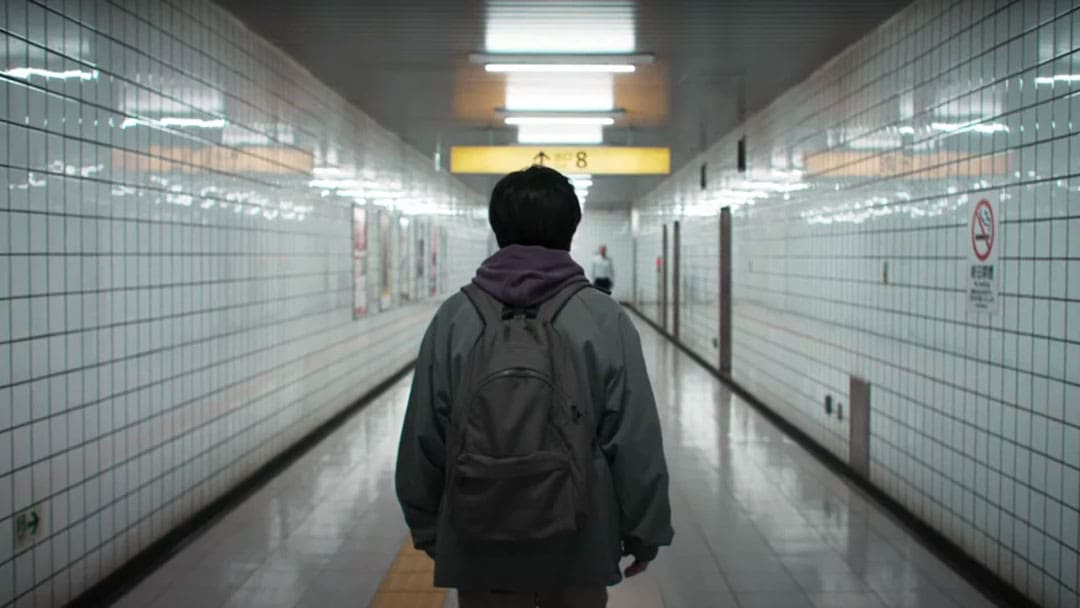
Oh yes, thank you very much. I am a sucker for a simple premise infused with layers of pathos and, importantly, executed more or less to perfection. Right when I was talking about cycles (regarding Last Night in Soho), along comes a literal representation of the psycho-cyclical essence of life as we cognitively and emotionally encounter it. That the cycle is guilt is of secondary importance to the idea that such cycles intersect with the similar cycles of others (and that we ignore this at our peril). This is rendered rather literally here – only by taking note of deviations can our hero hope to escape.
Speaking of cycles and guilt, it just so happens that Camus’ final cycle of creative output focused on guilt. The novel component of this cycle – La Chute [The Fall] – is my favourite of his novels. Every word of the book is the spoken dialogue of the central character, a self-proclaimed ‘judge-penitent’ haunted by a heroic endeavour he did not undertake out of fear and cowardice.
Surviving merely to judge himself and anybody unfortunate enough to get dragged into hearing his tale, he completes the telling of that tale by concluding that, presented with the same scenario in which we initially failed, we would only fail again:
A second time, eh, what imprudence! Suppose, dear sir, someone actually took our word for it? It would have to be fulfilled. Brr…. the water is so cold! But let’s reassure ourselves. It’s too late now, it will always be too late. Fortunately!
The magic of this movie is that it does not agree.
Viewed at Village Cinemas Crown.

3rd watch. A film I’ve gone all the way around the world with. I really didn’t care for it the first time. I don’t have notes from that viewing but l remember feeling like there was a good movie in here that was never quite drawn out; interesting parts that failed to make a cohesive whole. The second viewing a few months later uncovered nothing new, though I recall finding it more palatable. Flash forward 3.5 years and something about this movie just continued to gnaw at me so down I sat and, well, I more or less love it now. The Girl will call it “A Classic Greg Move”.
The boundary between this and that – between here and somewhere else – is so thin as to be transparent. David Lynch would remind us that the truth is just in the next room (if only we could get into that room). The passageways between here and there which the film conveys are never explained to the audience and it finally occurred to me that they don’t need to be. There is a door – a threshold – and that is all we need to know.
It may also be true that if we possess the ability and willingness to cross these thresholds, we will do so through portals as commonplace as music and at locations in space and time to which we are drawn with a force equal to our interest in them. The tuning fork indicates a straightforward path but that path can lead to madness if navigated with naiveté.
And that, more or less, is what this film captures (if imperfectly). The glittering allure of fantasy slips blinders on our eyes as we follow the road and we may find ourselves consumed not only by our own madness, but also by the haunted and sinister madness of others. We might be admiring the reflection in the mirror; we might be the reflection.
Thomasin McKenzie and Anya Taylor-Joy are sublime as the two sides of a psycho-tragic coin. Although this film would probably like for you to think it’s horror, there’s little here that is scary in the traditional sense. What is truly haunting is the idea that these cycles of tragedy – dreaming and falling (under the weight of exploitation) – continue to occur. If Eloise and Sandie are two sides of a coin, it is a coin that continues to flip.
4K digital at home.
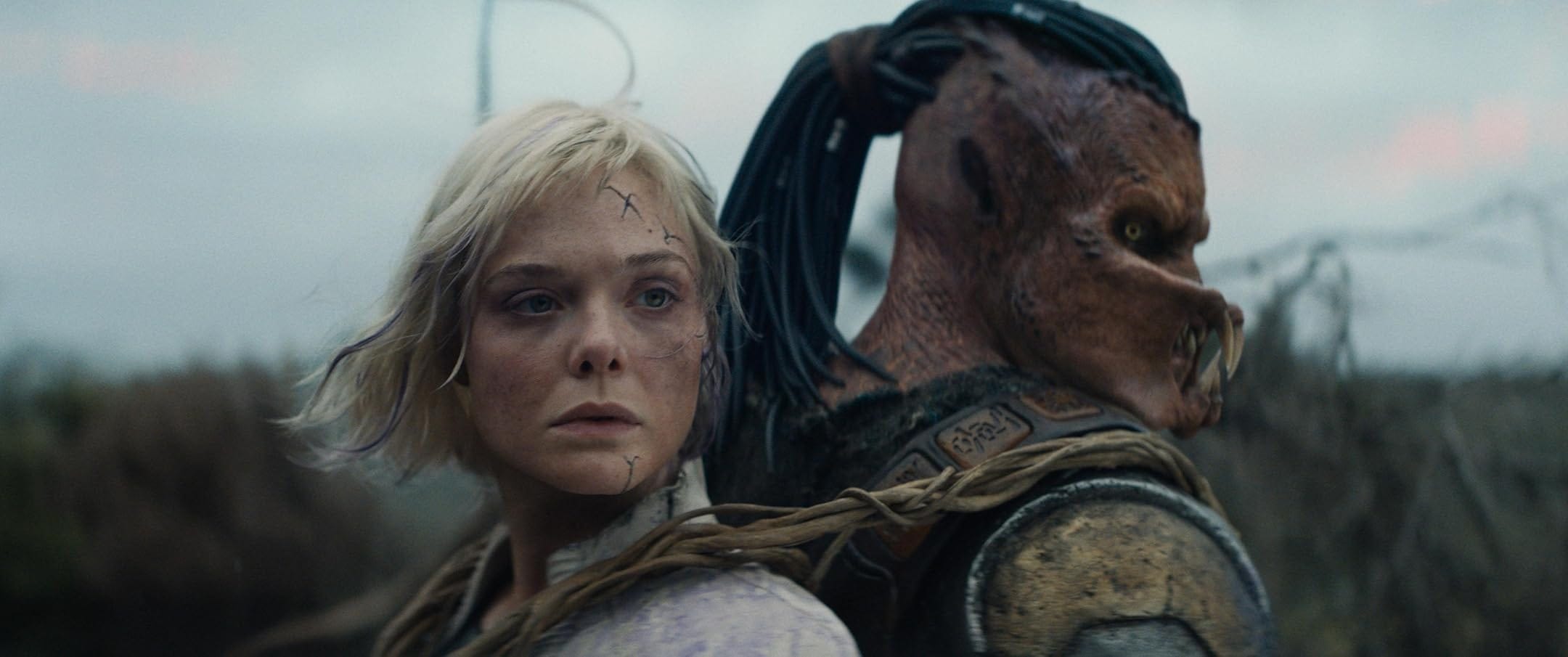
I was skeptical that this would be interesting to me. Inverting the narrative perspective of a Predator film from the prey to the predator seemed like it would rather defeat the purpose. To go one step further and give a ‘predator’ a hero’s journey seemed patently silly. But one of the hills I will always be happy to die on is that the phenomenological refrain that we must return to “the things themselves” is as true in film as in life. This is just a movie doing its own thing, and I’m just watching. Happily, this is one of the times I was rewarded for taking a film on its own terms.
Elle Fanning is really rather wonderful in the dual roles of Thia and Tessa. I do tend to enjoy when a villain isn’t evil for evil’s sake. Having one “sister” parading through the film with demonstrative power is a nifty narrative trick that allows you to buy everything that happens in the third act; that disembodied legs can be hilarious AND a killing machine.
Frankly, I regret not seeing this in cinemas. Some of the visuals are incredible. Craft is foregrounded, and it pays off. Competency gets you pretty far these days.
Streamed at home.
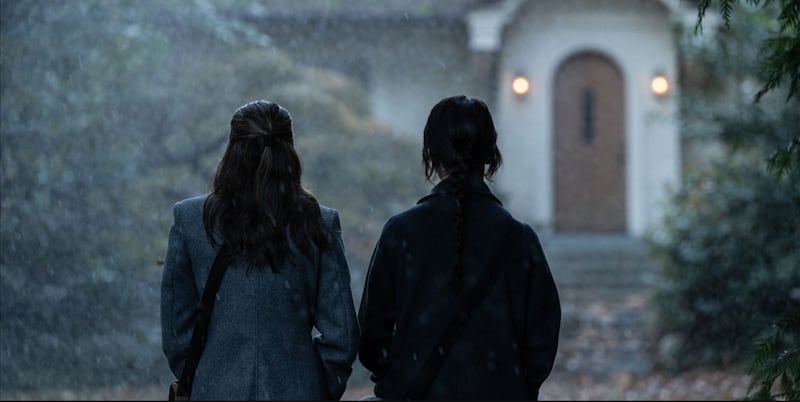
2nd watch – and on the couch with The Girl, a rare treat in our parenting era. This didn’t blow me away the first time but only because I’ve seen too many movies and it ended up being exactly what I thought it would be. Still, one enjoys the Active Ingredient of one’s medicine and in this instance it’s Sophie Thatcher and Chloe East. Never have you seen two faces do this much work – the joy, confusion, terror, anger, and sadness is masterfully rendered in so many tiny mouth movements, wrinkled eyebrows, and motionless eyeballs. It’s really pretty incredible.
I realised part of the way through that this film is a very good piece of submissable evidence in the case I’m always making that you’ll have more fun at the movies if you never assume the movie is set in “our world”. It might look like our world (a nifty trick to effortlessly make you understand the stakes, among other things) but it’s not. It’s kind of the inverse of the idea that characters do not know what genre they’re in (hence they behave irrationally in, e.g., a horror film).
It would be tempting to wonder many practical things about Hugh Grant’s character, for example, but the answers become irrelevant when you remember you can’t judge him based on the rules of our reality. Trust me, it’s better.
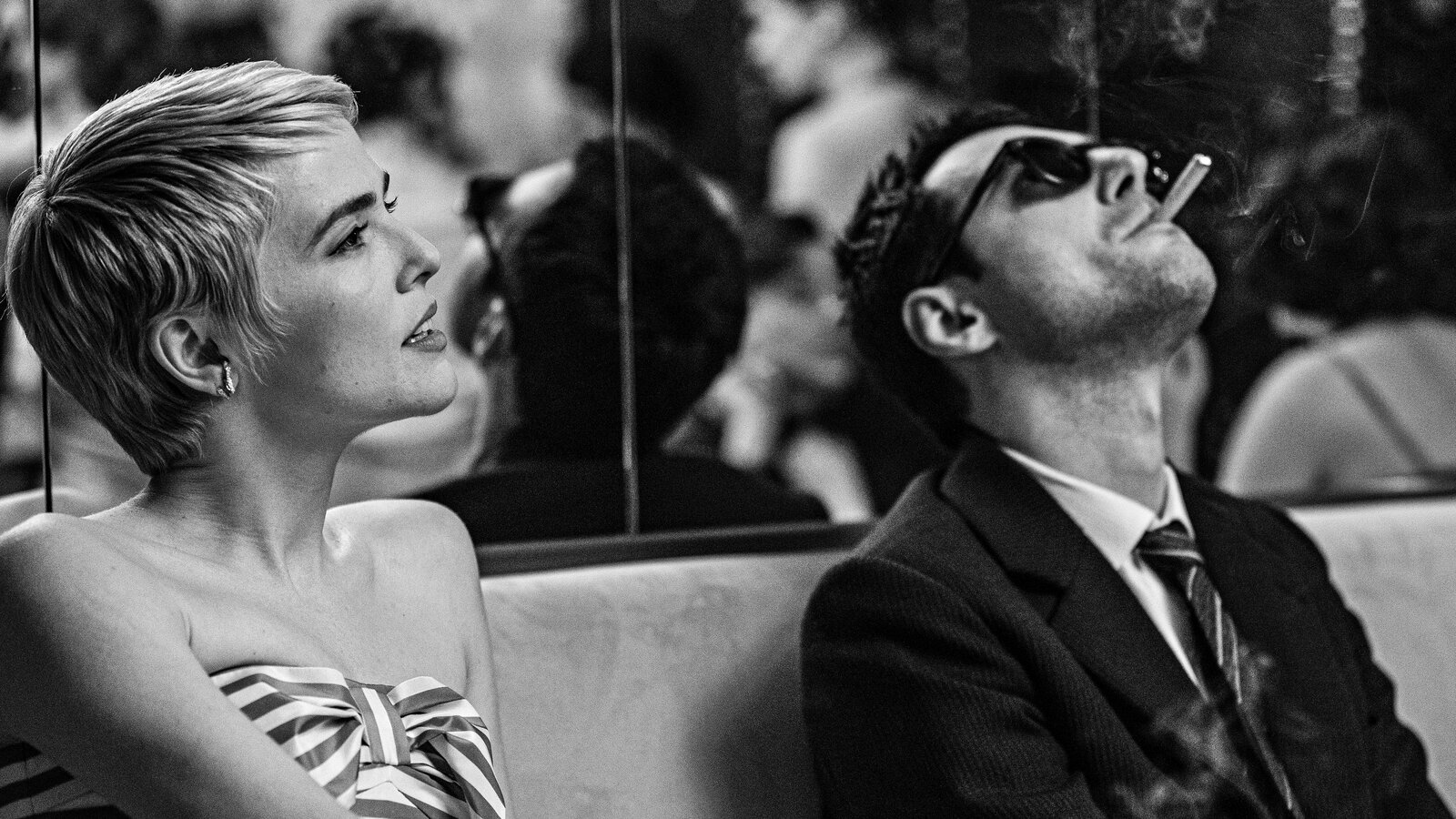
Pour moi, this was a romp. I have some awareness that if you don’t have a preexisting relationship with À bout de souffle, this would be hard to get excited about. But as somebody who went out of his way in Paris to walk the street where Godard filmed the last sequence of that film, not geeking out at the reimagined behind-the-scenes wasn’t an option for me.
The simple joy to be had here is that of watching somebody’s love letter to a film (and historical moment) of which you are also fond. I’ve seen it called a “hangout movie” but if that’s the case, it’s À bout de souffle itself that I enjoyed hanging out with.
The performances are wonderful, executed with a profound tenderness for the beloved figures being portrayed (while never settling for mimicry). It’s one for the film nerds, made by film nerds. Unable to view it as anything but, I found it rather joyful.
Digital rental at home.
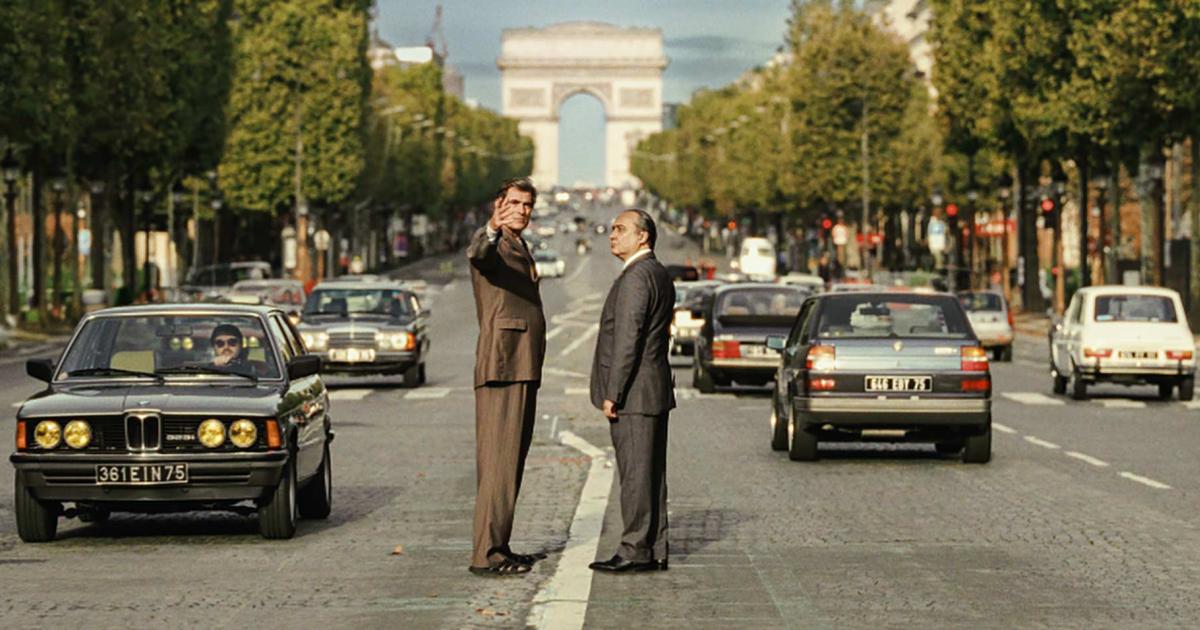
Something about doing a PhD focused on design thinking has turned me into a soft touch for all matters of design (which permeate all of life – la vie – of course). Stories about ‘visionary’ designers have a tendency of either obfuscating the relationship between a design and the self of the designer or leaning so hard into that relationship that the design process comes off as something like magic. There is no magic in design but there is absolutely a nonzero amount of the designer, no matter how untraceable or ineffable the link.
What this film does exceptionally well is refuse to separate design and designer. Indeed, this inextricability is the very heart of the plot. [French] bureaucracy is played for dark but knowing laughs and dodgy actors on the periphery infuse tension into the proceedings but, at the end of the day, this is a story about somebody who did a thing and refused to compromise.
On a personal level, this film highlighted a few shifts in my thinking that have come on in middle age. Specifically, the value of a life and how it’s constructed. Not so long ago, I probably would have found this a rather dreary and uninspiring story of somebody who couldn’t beat the system. Moments that are inarguably heroic would have been interpreted as sad or bleak. Fortunately, I’ve come to recognise agency as perhaps the primary goal in life. A life well lived is a life lived the way you’d care to live it. In this way, such a life is the quintessential design.
French Film Festival at The Kino.
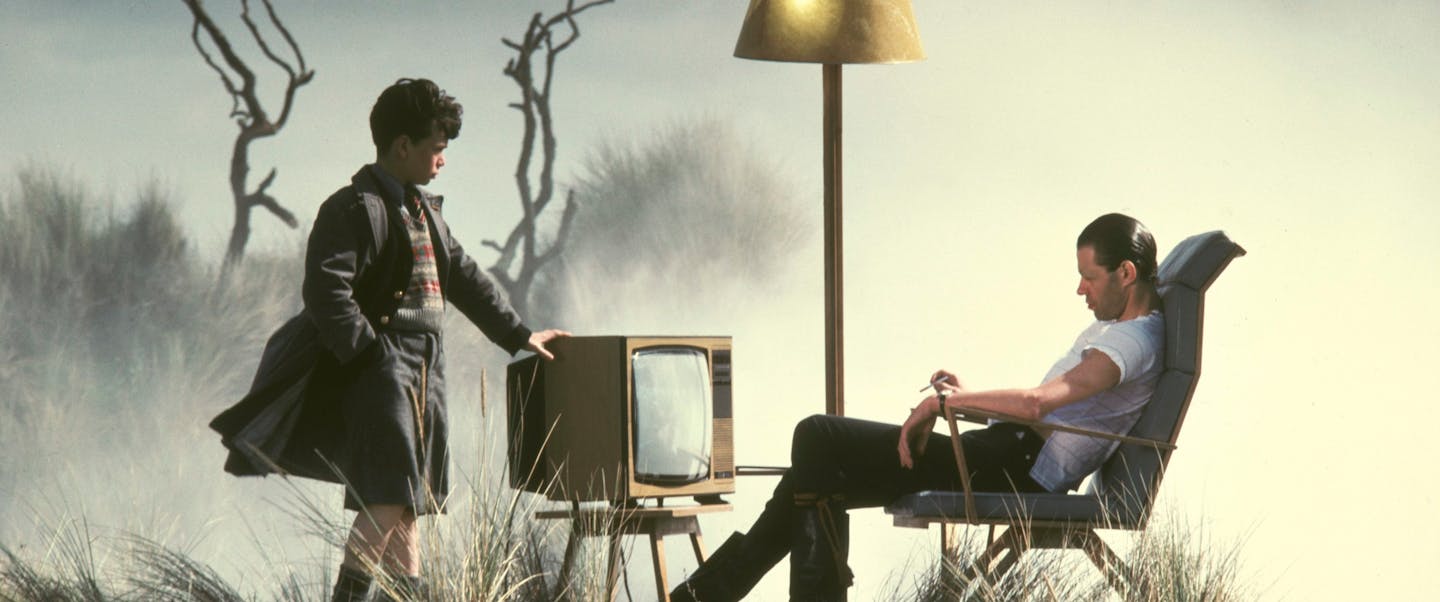
2nd viewing; 1st in cinema. And it’s been at least 20 years since that first watch, because apparently now I’m old enough to talk about time in decades instead of years. Over those two decades, the importance of this album has only grown in my mind – it is well and truly a favourite, and it resonates differently with every life threshold I cross (most recently: becoming a father to a son).
The father-son thread is laced through the album, of course, but is explicitly (if not confrontingly) foregrounded in the film. A bit much for me at a random Wednesday matinee screening, but we make do.
Simply put: this is sublime. Close-up photography highlights the grotesqueries of life, animated segments take you through the looking glass of abstraction and out the other side, and the narrative steps forward to be admired in all of its glory. Truly a tremendous 100 minutes. I shan’t go 20 years before watching it again (hell: I’d go again tomorrow).