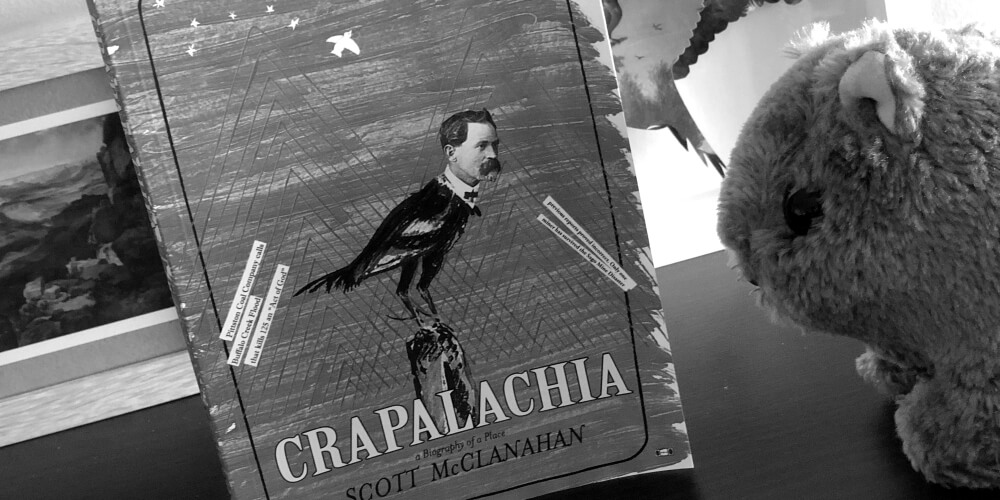
• One Man’s Appalachia Is Another Man’s Crapalachia

    Crapalachia by Scott McClanahan

    I have always felt – and will always feel – a connection to my home state of West Virginia. It’s very much an organic connection to the land; the mountains. Yet, the impetus for this connection is one of fate. As Ron Currie writes in Everything Matters!, who we end up taking out a mortgage with is largely an accident of geography and economics. It stands to reason that any children which result from such an accident stand a good chance of enjoying that same geography (and are almost guaranteed to share the economics). Indeed, I was born in Wood County, West Virginia, as my parents were, and as their parents were. My connection to the land is the product of the latest generational output of this cycle of destiny and yet the accidental origin of that connection does little to dilute the potency with which it perpetuates. I might have migrated to Australia in 2009 but I am what I am, and that’s West Virginian.[note]As my relocation to Australia would suggest, the generational cycle of producing Wood Countians will likely cease with any children that The Girl and I might have one day. Their Australian-Appalachian heritage will be a complex one to evolve into, but they’ll likely prove to be fascinating case studies for linguists and speech therapists.[/note]

    The author of Crapalachia, Scott McClanahan, likewise is what he is, but that ‘what’ is somewhat difficult to ascertain. He was born in West Virginia and he lives there now – this we know for sure – but his connection to the land is difficult to triangulate. Perhaps this is because he writes of the West Virginia landscape – the mountains, in particular – with an awe that seems to drip with resignation. He writes of how his childhood friend Bill tried to teach him and his friends about the mountains that surrounded them – their names and elevations – but not one of them cared to learn about where they were from; where they were. He writes of coming to regret this in adulthood, but the resulting interest appears to have come on a little too late.

    McClanahan seems to wish either that West Virginia were some other place, or that his own accident of geography and economics had rendered him from some other place. Either way, there is a meaningful disconnect between what he is and what he wishes he was that seeps into this novel / memoir / journal. The feelings are real, and the prose that conveys those feelings is capable – in momentary heights – of breaking your heart (“I told her I was putting blankets in the trees for our children, so that no matter where they went – they would always be home.”), but the target is unclear. In this way it sometimes reads like a love letter to a girlfriend he can’t quite remember, or who maybe never existed, or who maybe he never really loved.

    None of this is problematic in a general way, of course. There is no right or wrong way to skin this particular cat. I wanted to like Crapalachia and I largely did. Stylistically it is memoir in the way that Frederick Exley’s A Fan’s Notes – one of my favorite books – is memoir. That is: it’s so exaggerated and fictionalized that it’s really closer to being a novel. Exley never shied from that fact (he declares the fictions at the outset) and neither does McClanahan (who uses an afterword to roll out an itemized list of the liberties he took). Were Crapalachia not about the place that geography and economics destined my soul to be forever linked to, I likely would love the book without reservation. But it is, and so reservations have manifested.

    Writing about your home is a tricky proposition. The many ways in which such an endeavor is fraught with peril have long made me reticent to write of West Virginia in any general way. I’ve always kept it personal, hoping that leaning explicitly and overtly on my own, very individual experience would render my depictions of the state unassailable by those who don’t share my perceptions. The love-it-or-hate-it nature of the commentary around Crapalachia would seem to suggest that my fears are justified.

    The book initially popped up on my radar while I was reading up on Breece D’J Pancake. Pancake resented the way that West Virginia – also his home state – was depicted in popular writing, and he set about crafting stories that would correct this deficit of authenticity. By virtually all accounts, he succeeded, and his single published work (a collection of short stories) has developed something of a cult following among readers and writers (not unlike the following A Fan’s Notes enjoys). Somewhere in the midst of reviewing this ongoing commentary, I saw Crapalachia put forward as a modern work that achieved the same authenticity that Pancake aimed to deliver.[note]Pancake had a way of writing fiction that considered the layering of time, in both a generational and prehistoric sense. I tend to view the world around me in a similar way – imagining the way that the world looked in yesteryear; what it might look like after I’m dead and gone. McClanahan does the same in Crapalachia: “And as we drove through the holler I could see the whole place. There was a moment when it felt like it was 1930 and I was traveling through time. I could see the mine. I could see people walking. There were houses everywhere.” Is it something about being from the mountains that makes one prone to considering their surrounds in this way?[/note]

    So it was that I cracked the spine[note]Just kidding – I would never actually crack the spine of a book. I’m so careful with the external condition of my books that the ones I’ve read appear as pristine on the shelf as the ones I haven’t touched (on the inside they are scribbled to death but that’s on the inside, you guys). Ask The Girl about the time she accidentally cracked the spine on one of my paperbacks. Or maybe don’t.[/note] on Crapalachia under the influence of high expectations of authenticity… and the touchiness about my home state that is the birthright of all West Virginians. Both were ultimately activated.

    The impression that I get from McClanahan (from this book as well as a few interviews with and depictions of him) is that he wanted to deliver an authentic tale of life in Appalachia. This much is apparent from the aforementioned list of liberties that he took with the truth; the reconciling with the factual people and stories that were woven into the tale of this book. In many cases this list is apologetic. McClanahan states that the stories which ultimately became Crapalachia went through many forms. He stops short of saying that all of this reworking involved so many turns that he lost track of his destination.

    Ultimately, McClanahan might have wanted to deliver an authentic Appalachian story – perhaps even for the same reasons that Pancake wanted to – but the apparent disconnect between McClanahan and the land seems to have prevented him from doing so. The story isn’t inauthentic, exactly, but it is peopled with amalgamations of real people who are rendered unbelievable by said amalgamation. All of the themes in the book ring painfully true – the obsession with death, the difference in perception of farmers vs. miners, the desire to escape, the bone-deep boredom – but their presentation here is authentic in the way The Simpsons is authentic. Sure, it’s made for socially-conscious adults, but it’s still a cartoon.

    The danger, of course, is that Crapalachia[note]Even the title – Crapalachia – is damning. When one is proud of their home, one tends not to call it ‘crap’. McClanahan attempts to let himself off the hook for the title in the afterword, but of course there would be no hook to let himself off of had he not put himself on that hook in the first place.[/note] is seen by ‘outsiders’ as being essentially authentic. These are the non-natives who sing Take Me Home, Country Roads at karaoke and never consider the tragedy that finds the narrator of the song loving a place so much and yet ostensibly living elsewhere.

    The authentic West Virginia is – among many, many other things – one where ‘Big Coal’ has taken advantage of a work force – of a people – for so long that those same people now believe not only that it’s the only work they deserve, but also that it’s the only work they want. The fact that one’s view of this phenomenon as inherently good or bad is measured on a wide spectrum underscores why it is difficult to write about West Virginia in a way that won’t offend somebody. You’ll note that I’m leaving my position on the matter deliberately vague. The fear is real.

    McClanahan has seen these same things. Indeed, he grew up in the thick of coal country whereas I grew up on the fringe of it. He shares similar thoughts about coal in Crapalachia but he is careful about where to point his finger when doling out blame. He appears to share my fear of offending somebody; anybody. Unfortunately, this leaves the reader to fill in the logical blanks and it is his characters who end up copping the blame. For instance, the line “…only poor people are desperate enough to work in a hole and then thank [G]od that they have a job working in a hole” presents a chicken and egg dilemma – which came first: the mining company or the poor/desperate person? – without positing an answer.

    The troubles of West Virginia are thus presented by McClanahan as being natural; perhaps God-given. That he might be right is neither here nor there – the danger is that the decision is delegated not to West Virginians exclusively (I can say this from experience: West Virginians rightfully believe that we are the best judges and defenders of our own misery) but to everybody. Once again, the state has been left to the mercy of outsiders and if history has taught us West Virginians anything, it is that this mercy will not be forthcoming.
  • Somewhat Chilling

    Wish I would have had my DSLR for this sky, but the iPhone X more or less captured it. Sydney smells like a campfire at the moment, which is somewhat chilling when you think about why that is.


  • Such Is The Story

    My body likes to shut down on me when I get a moment of down time, which leaves me completely zapped for energy. Such is the story of my weekend.


  • At Least One Word

    Tonight The Girl is up for yet another award in her career. She is as lovely in her long black dress as she was in her pajamas this morning. But don’t tell her I put that on the internet.

    To watch my girl work is a miracle of a thing. I’ve had the pleasure on many occasions and yet she always finds new ways to impress me and those who she is working with and/or alongside.

    I tell her often that I struggle to write about her. This is primarily a selfish failure, as I tend to be very protective of her. I want her all to myself.

    But there is a more practical failure, and that is one of language. There are simply not words that communicate precisely how I see her – much like the way that photographs never quite capture the majesty of a sunset as you’re seeing it in situ.

    But considering her today, there is at least one word that applies to the whole of her being: brave. She never stops moving, working, thinking, failing, trying – and so she’s also yet to stop succeeding.

    Tonight, then, is significant. But it is just one step on the journey I’m lucky to get to share with her.


  • Time Well Wasted

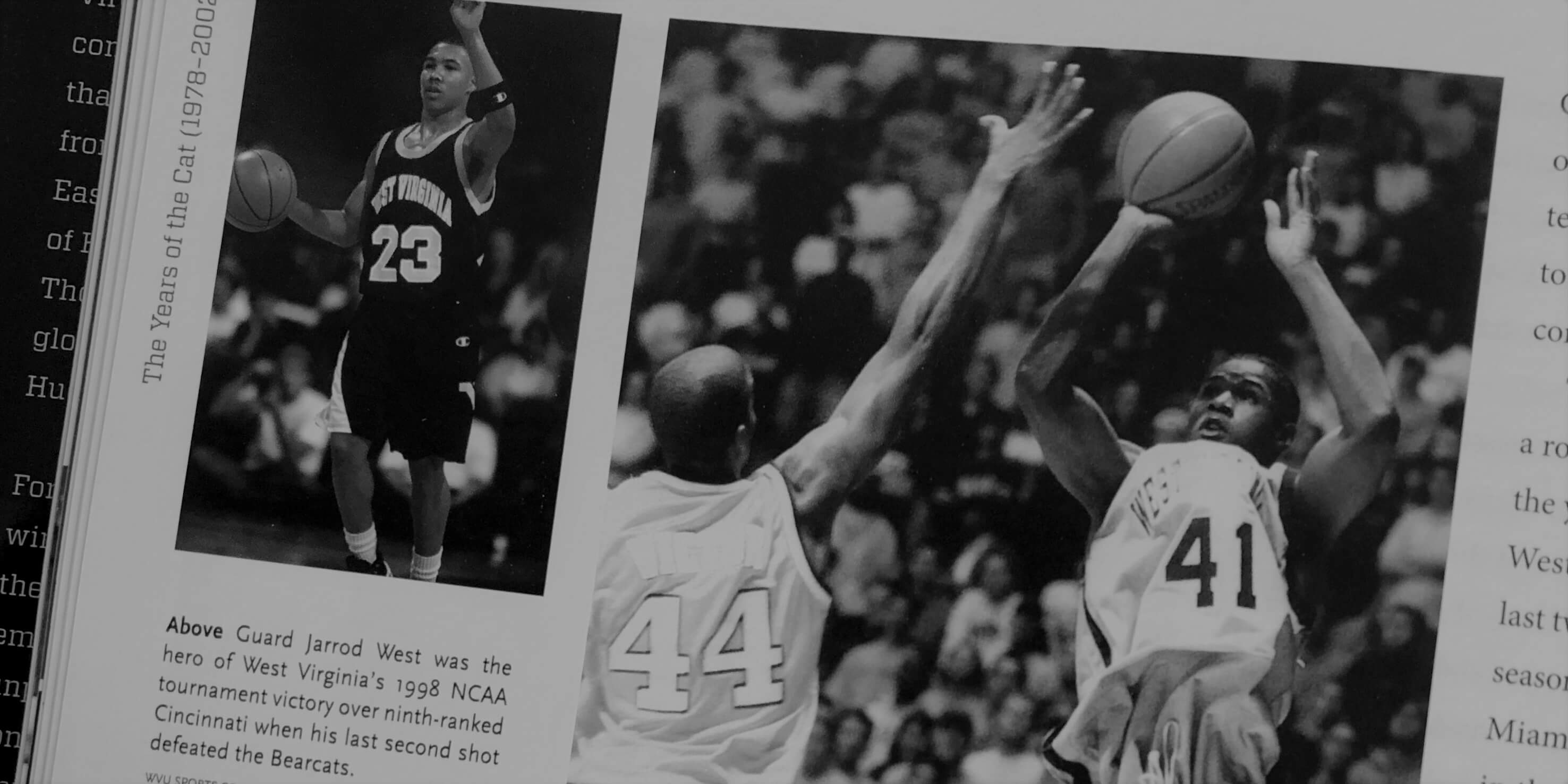
    Jarrod West 1998 NCAA Basketball Tournament West Virginia WVU Cincinnati Upset

    My dad told me I was wasting my time.

    My West Virginia University Mountaineers were about to face off with the University of Cincinnati Bearcats in the second round of the 1998 NCAA basketball tournament. Admittedly, the prospects were not good. Cincinnati was the number two seed in the region, WVU was the number ten seed. The Bearcats roster featured players with one foot in the NBA while the Mountaineers were a largely unknown bunch who were just happy to still be playing in March. The pundits on ESPN figured that Cincinnati had a real shot at winning the National Championship, while WVU merely had an opportunity to play a basketball game that day.

    Thirteen years old and alone on the couch in the living room, it seemed that I was the only one foolish enough to think we even stood a chance.

    I was born in West Virginia, which means there are photographs of me as a baby adorned in the ‘Flying WV’ – the logo of West Virginia University. Beyond such social indoctrination, my earliest memory of any kind of proper allegiance to the old gold and blue is a fuzzy awareness that I watched the 1994 Sugar Bowl in which an undefeated WVU football team lost to Florida by a score that lacked even a hint of uncertainty: 41-7. I was nine years old.

    Mere months later, my family moved from West Virginia to Kentucky. This relocation landed me in a basketball-crazed state that proved to be a strange garden in which to grow my budding WVU fandom, but the perfect environment in which to weave that fandom into my identity.

    The television broadcast of sport events was dictated by region in those days, meaning WVU football and basketball games were virtually never shown in Maysville, Kentucky. That exposure belonged exclusively to the University of Kentucky Wildcats.* My only means of tracking the success (or lack thereof) of my Mountaineers, then, were the brief summaries of their games on SportsCenter, which rarely featured video. I followed the entirety of the 1996-97 college basketball season in this manner, which saw my Mountaineers fall just short of an at-large bid to the NCAA tournament.

    Naturally, my middle school classmates were not interested in what was happening with WVU basketball. The University of Kentucky had won the national championship the year before and were favorites to repeat the feat that year. I remember sitting in my seventh-grade history class before the bracket was announced and filling sheets of notebook paper with the accomplishments of my team. My friend did the same thing alongside me, except for his beloved Kentucky Wildcats. His design predicted another UK national championship – mine merely campaigned for WVU to be invited to the tournament. Neither one of us got what we wanted that year.

    Being in ‘enemy territory’ has a way of prompting one to entrench even deeper in their beliefs and allegiances, and this was very much the case with my love of all things WVU. The more my classmates wanted to talk about Kentucky basketball, the more I ignored them and focused on what my own team was doing.

    A (horrible, horrible) fashion of the time were puffy Starter-brand coats made in bright colors and very-nineties designs. Looking around Mason County Middle School in the late nineties, you’d be forgiven for believing that every student was issued the UK Wildcat version of this jacket at birth. And you’d probably be surprised to see one student wearing an old gold and blue version of the jacket with the Flying WV stitched across the back.

    Colors and logos and the apparel on which they’re stitched become flags of sorts, and in that way mine came to identify me not only as a fan of WVU sports but also as a West Virginian in general. My flag was unique and as I grew into a teenager, I began to see the value in that uniqueness; to understand how being from West Virginia had made me see and move through the world a little differently. Even at such a young age, I began to understand the way identities are defined and built. It’s not at all difficult to see how I began to associate such things with the sport teams that drove me to wear those clothes in the first place.

    The 1997-98 college basketball season saw WVU receive an at-large bid to the NCAA tournament. Although they were the ten seed (out of sixteen) in their region, I was the most excited I’d ever been about sports. My classmates, of course, were fixated on their UK Wildcats – favorites (yet again) in some circles – but some of them were distracted by the prospects of a school just an hour down the road: the University of Cincinnati. A local boy was on the roster there, and they were slotted in at the same regional two seed that UK had received.

    Naturally, regional broadcast schedules (and school…) prevented me from watching our first round game but fortunately the good guys prevailed setting up a match with… the University of Cincinnati.

    When I went to school the next day, I was surprised to discover that my classmates actually – finally – wanted to talk about WVU basketball. They wanted to know about the players whose names I had become familiar with over months of getting up at 6am so I could see the whole hour of SportsCenter before school. They wanted to know more about this team that I liked for some mysterious, maybe unknowable reason. My intel was in high demand but it did little to scare anybody. The smart money was on Cincinnati.

    Apparently, so was my father’s money. The next day – buzzing with excitement – I could barely sit still as the CBS broadcast switched over to our game. It would be the first WVU basketball game I would see that season. My expectations were high. I wasn’t old enough to process the disappointment of the 1994 Sugar Bowl. Or of the 1989 Fiesta Bowl, which was the de facto national championship game that year. My dad knew those disappointments and had lived through some largely mediocre decades of WVU basketball. When he told me that I’d be wasting my time by watching the game that day, he was probably just trying to help me avoid heart break.

    Today I remember nothing about the first 39 minutes and 53 seconds of the game. I remember only the final seven seconds. At that moment, Cincinnati’s D’Juan Baker had just hit a three pointer to put Cincinnati in front by two. This wasn’t entirely devastating – WVU could easily move the ball to the other end of the court in that time and find at least the two points that would send the game to overtime. But this is not what happened.

    Instead, Jarrod West stopped three steps short of the three point arc and – with over three seconds left – threw up one of the most ill-advised shots I’ve ever seen. Rather than take the extra seconds to drive through a disorganized Cincy defence and live to fight in overtime, West went for the win with a rainbow shot so tall it was a threat to hit the rafters. Instead, it hit the backboard in a spot that doesn’t usually lead to a friendly bank.

    It was an ugly shot. An ill-advised shot. Altogether: an unnecessary shot. But none of this matters because – twenty years on – it’s the ugliest, most ill-advised, most unnecessary shot I’ve ever seen go in.

    Thirteen year old me lost his thirteen year old mind. The luckiest of sports fans experience many moments like this, but this was my very first. There have been others since. Two of these – a 2003 defeat of #3 Virginia Tech in football and our victory in the 2006 Sugar Bowl, which was the final game of my four years in the WVU Marching Band – took place while I was an undergraduate at WVU. Bob Huggins, the coach of the Cincinnati team we defeated that day, would later come home to West Virginia and lead us to a Big East Tournament championship and the Final Four in 2010**. It would take until 2013 (and an overseas move) for any of my teams to win their respective championship (the Sydney Roosters of the National Rugby League). I’m still waiting for that elusive national championship for WVU.

    The week after this game, WVU fell in a close game to the University of Utah, ending their run in the tournament. It would be another seven years before we returned to the tournament in 2005 – my junior year at WVU. I would be in the stands for our first and second round games, the second of which saw another upset of the two seed: Wake Forest.

    My family moved back to West Virginia before that 1998 tournament concluded and I found myself quietly cheering for Utah to continue winning, if only to – in some small way – make our prior loss to them somehow more valiant in hindsight. And continue winning they did, running all the way to the championship game before finally meeting their match. Imagine my relief when I went to my new high school in West Virginia the next day and nobody had a single word to say about the team that bested Utah to win that 1998 national championship: the University of Kentucky Wildcats.

    * With Tim Couch under center, even UK football was interesting at this time. Go figure.

    ** This story isn’t complete without cheekily noting that Kentucky was the team we beat to advance to the Final Four in 2010. Sorry not sorry, guys.

    Greg Joachim was born and raised in West Virginia and still has those baby photos to prove he has been a Mountaineer fan his entire life. He graduated from West Virginia University in 2006 (B.S.) and the University of Technology Sydney in 2014 (M.B.A.) where he is now a PhD researcher attempting to maximise the social outcomes of youth sport programs. He lives in Sydney with his wife, Claire.

    Reach out to him on Twitter: @gregjoachim


  • Who Needs Filters?

    Who needs filters when you have sunglasses?


  • Coppas Hoping For Some Runs

    From the Australia vs. England ODI at the SCG back in January. This was my favourite shot of the day, and it’s the only one that doesn’t feature the field of play. Just a couple of coppas hoping for some runs – no worries, mate.


  • A Dangerous Habit

    The Girl and I live quite close to the International Terminal of the airport, which finds us wandering over there every now and again to have (an overpriced) dinner and fantasize about our next holiday. It’s a dangerous habit in that way.


  • A Slow-burning Socio-economic Horror Story

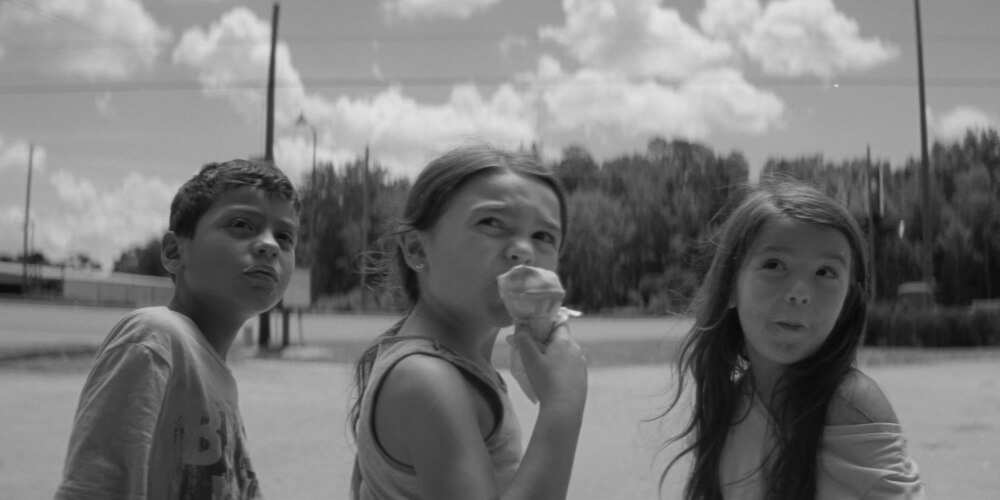
    Not A Review - The Florida Project

    Orlando is a romantic yet transient place. I lived in or around the city for a period of two and a half years after graduating college and in that time I only ever had a meaningful relationship with two people who were from there; Orlando born-and-raised. Everybody else who crossed orbits with me was – like myself – from somewhere else: Texas, New York, Pennsylvania, Ohio, Wisconsin, or – in my case – West Virginia. Many of these people left Central Florida before I did and those who are still there are – in a way – on the clock. It’s not a matter of if they will leave; only when.

    Perhaps it is because I have gone in and then out of this particular social revolving door that few of the events in The Florida Project caught me off-guard. I lived in the area through Acts One, Two and Three of the global financial crisis and can vouch for the authenticity of what viewers see through the eyes of the film’s child stars. There are indeed sprawling subdivisions of empty – or incomplete, in some cases – houses or condominiums. I used to drive by them or through them on the way back to the house I shared with a good friend – a house she had bought on a GFC-induced short sale. While this was good for her and (by extension) me, it was presumably very bad for some unseen victim of hard times.

    If real life were to somehow cross into this film, some of these unseen victims might have ended up in the room next door to the main characters – six year old Moonee and her mother, Halley* – at The Magic Castle, a very real hotel along Route 192 between Walt Disney World and the Orlando suburb of Kissimmee. Many victims of circumstance did end up there – or in other discount hotels in the area – and some are still there. They have a roof over their heads but can’t establish residency (a fact which causes some drama during one scene in the film) and are therefore technically homeless; members of the “hidden homeless”.

    As a hiring manager in my job at the time, I used to see job applications come through with hotels listed as the address. Considering the job they were applying for paid minimum wage and offered few weekly hours, they would have been struggling just to pay the rate at the hotel. To make ends properly meet, then, other hustles had to be pursued. Some of these hustles allowed everybody to win, such as the perfectly-legal sale of theme park friends and family passes** to coworkers. Others – like dealing drugs out of the back of our workplace – were less legal and inevitably sent the person right back to where they started.

    [Note: I freely and openly discuss important plot points of The Florida Project through the rest of the essay, including the very ending of the film. If you’re averse to spoilers, reading this will need to wait until after you see the film.]

    The trick of The Florida Project is that we – the removed adults – see the signs of Halley undergoing this struggle (and pursuing increasingly illegal hustles), but we see it through the oblivious eyes of her child. In this way the film plays differently for the two different perspectives. Viewed as a tale of growing up, it is unquestionably magical. Moonee and her band of friends (one of whom departs Central Florida’s revolving door when his dad whisks him off to New Orleans – presumably for the promise of work) make their own adventures, ignorant to the fact that mere miles down the road, thousands of kids are enjoying days at Walt Disney World. Not once do we see Moonee begging to visit the nearby theme park, even though her sadness is palpable in a scene where she watches her mother sell stolen park tickets to a tourist. The Magic Castle is Moonee’s very own Magic Kingdom.

    However, for the adults, The Florida Project unfolds as a kind of slow-burning socio-economic horror story – like a Hitchcock film where the inevitable and inescapable end is the destitution that had only been kept just at bay. Toward the end of the film, Halley and Moonee do what all of us have thought about doing at one point or another: they stroll into a hotel where they are not staying and take advantage of the free continental breakfast. We see only Moonee’s face as she enjoys (and hilariously critiques) all that the (stolen) buffet has to offer. Eventually she concludes to Halley that they have to come back, at which point the camera cuts to her mother and reveals that she is not enjoying watching Moonee nearly as much as we, the audience, have been. When an attendant asks for her room number, Halley gives the same room number that they live in at The Magic Castle. It’s a quick line, but a poignant one: although the number might be the same in each hotel, they represent access to two very different realities.

    Moments later, the two return to the less fun of their two room numbers and this duality comes into play in a significantly different way. We learn that Halley didn’t enjoy breakfast because it was actually their last supper: child services have come for Moonee. This is the tragic ending of the adult film. Moonee, however, doesn’t take her forced separation from her mother without a fight. She flees to the neighboring hotel where her best friend ‘lives’ and delivers a tearful good bye – and here is where the film is lifted from great to transcendent with the best ending I’ve seen in years.

    The final forty-five seconds of the film see Moonee ‘run away’ with her best friend. They run past settings we’ve seen and toward one we haven’t: Walt Disney World. In a few moments of obvious fantasy, the two escape from their Magic Castle and arrive in the Magic Kingdom. Like room doors in two different hotels but with the same number on the outside, so are these places the same but different. Much as her mother temporarily (and fictionally) checked into a different, nicer room in order to get a free breakfast, so does Moonee check into a different, nicer room with her imagination. As the credits of the film roll over muted crowd noise from inside the park – the sounds of “the happiest place on Earth” – the audience slowly realises that two tragedies have unfolded here. Not only has Moonee been taken from her mother, but her response to this turn of events was a failed attempt to do the same thing that almost everybody in Central Florida eventually does, but which she will likely never be able to do herself: leave.


    * Those who have read Freakonomics will recall that Steven Levitt and Stephen J. Dubner were able to establish correlations between names such as Moonee and the level of education obtained by the mother. The relationship doesn’t bode well for Halley, which is a thread that could spawn a whole other essay about this particular film.

    ** You can’t trip in Orlando without falling into five people who either work at or know somebody (or several somebodies) who works at Walt Disney World or Universal Studios. Friends and family park passes are a kind of sub-currency among non-tourists in the area. As dark as that might sound, my own memories of the phenomenon are of inclusion; of being a ‘local’ without being a ‘townie’.


  • Perfect And Bright

    Straight out of the camera, which speaks to how perfect and bright this late-December Western Australia Day was.